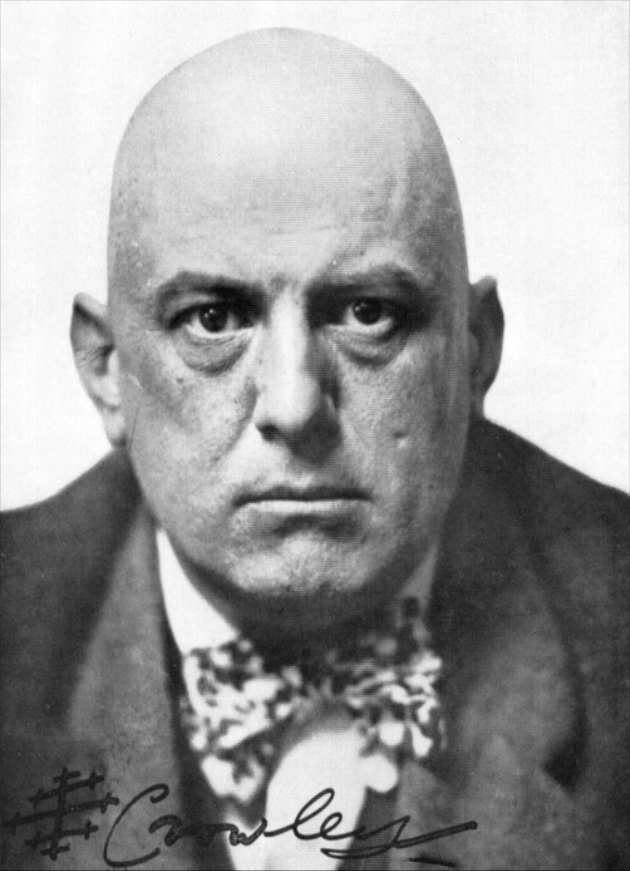
After viewing Mike Calway-Fagen's art work at Vox Populi I decided to delve a little bit into his self myth and went through his website and read his artist statement there. I came across a word that I hadn't seen before: anthropocentric. Loosely it is the idea that humanity is the center of the universe and that everything is here to benefit man, be it at the expense of other lifeforms. To distill it further, that as a race we are egocentric. Mike states that this is the cause of our past, current, and future apocalypse. In a quick effort to bring us to a similar vein of thought and into my first assumption. . . I don't believe Mike means apocalypse in, what most of us associate the word with, the biblical sense. I assume he is using the term as "a major misconception of ourselves", a "veil to be lifted" from our metaphysical egos.
Setting those semantics aside for now I want to address the idea of anthropocentrism. To start off many people consider this a negative trait. That viewing the universe through an exclusively human experience is bad. I believe that one should remain open to multiple view points but retain an opinion. There have been many times I thought for sure that 2 + 2 = 5 to discover that the idea wasn't as solid as I thought. However, its the thinking part that is important. Instinct is to be respected, but thought furthers things a bit, huh? I don't think that anthropocentrism is a negative trait. I believe that it can lead to negative traits, but one can take cleanliness to a negative place as well. We are in competition with other species for resources. They more so than us, (ego?) but a natural competition anyway. Jump. Lets examine competition in a more facilitative way, say an Olympic foot race. . . and use this as an analogy for anthropocentism (and use an anthropocentric game to do so) In an Olympic race its fair to say that the athletes are in similar, if not the same, physical condition. What separates the medalists from the non-medalists are their view points of themselves. Winners tell themselves they are the best, the race losers tend to have nagging suspicions, lose focus. In effect Ego wins the prize. If you are running this race and a fellow sportsman falls, breaks an ankle, do you stop in the middle of the race to help or finish and come back to make sure he is tended to, or assume he will be attended to?
The crux. In an effort to achieve is it not right to assume we are the best, to tell your self, "I can?" be the little engine that could? Exclusive and excess outlooks of anthropocentrism could very well lead to a biblical apocalypse in addition to the other definition earlier talked about.
In Mike's work I see the Hunter. His pieces exude an outdoors man's, a huntsman's aesthetic including taxidermy, boats, animal motif's, weapons, and totems. Is this what it boils down to? An idealistic hunter who believes that he needs to manage his game population to continue both species well being? Or to keep his resource from depleting? Does he wonder if the animals have a mind/soul? Does he pick out their personalities and translate them into human terms? I can't translate my thoughts into a sparrow's or a deer's. Isn't that ego? To bend the terms of their understanding into yours? Colonialism at its worst? Are we trying to colonize the psyche of the animal kingdom with our own agenda? Of course we are. Does PETA have their own agenda?
Have they consulted with the whales and seals, or do they rely on human data? Maybe. I don't know. Its just a spur question. Is it really the thinking and trying that matter? Or is it only the actions? Or is the original message/action irrelevant? Was Aleister Crowley correct? "Do what thou wilt?" Is the only thing important the receiver's interpretation of the message? Francis Bacon's "Anything can mean anything" relies upon an agreed code. Can we alter the coding in our own nature or just how it is received? Anything can mean nothing. Are the veils of reality that we wear needed to be lifted? Are we afraid of what we might see? Would we sacrifice ourselves for beings separated/different from ourselves in order for our own apocalypse to happen? Mike Calway-Fagen's work is up for your own message receiving. At least its asking questions. I think. For more discussions and work visiting questions in an aesthetic manner visit the PostColonials Show at Linda Matney Gallery in Williamsburg, Virginia. Openings will take place on March 18th at 7 p.m.
Be there or be ^2.
Showing posts with label Figure Painting. Show all posts
Tuesday, March 1, 2011
Thursday, January 20, 2011
The Crow Bites Everyone Eventually, Or Dawna Summers Eat Your Heart Out
As I investigate the Child Ballads further I've created some designs for T-shirts (and soon to be printed) posters. If you are just starting to read my blog posts the past few have been on the subjects of history, Child Ballads, and interactions between cultures and etymology. Francis J. Child collected and traced the history of 305 Scottish and English ballads in their American variants that were prominent in the late 19th century, many of which can still be heard today through airwaves and just about anywhere you hear music. These ballads infiltrate rock n' roll, soul, spiritual, country. . . well almost anytime a story is told in song. The ballads cover superstitions, love, tragedy, non-tragic love, Robin Hood, Outlaws, Historic, Humorous and Semi-Burlesque themes. Brought to the forefront of my interest by the influence of friends and the inclusion in Art Exhibitions (including the first New York City show I'll be part of is Feb 10th and 11th - EXCITMENT) I've started to approach things through a print along with the painting side.
One of the latest print designs I've been working on is for Child Ballad #111, entitled "Crow and Pie." It is one of the older ballads having been traced back to the early 1500's by Mr. Child. This may be considered a tragic love theme. I don't think it would be fair to pigeon hole it as such as it becomes complicated in a contemporary interpretation. The ballad starts out as a "Gentleman" rides through the forest and spots a maiden singing, he approaches her and tries to seduce her by offering his love, and is denied with the phrase, "The crow shall bite you" (updated spellings there). The crow associated with death and suffering must mean in modern terms, "wander off and die please." He further offers her a golden ring, then a velvet purse and each time is refused and she tells him, "The crow shall bite you". After the third refusal he rapes her. She asks for marriage or some sort of personal token (as would prove he was of social standing versus some common person and would provide for the child if there was one) and with each she is met with a refusal and the sexuallized phrase, "For now the pie has pecked you," (again updated spelling). Pie is an older term for the English magpie, a Corvid cousin to the crow. Perhaps similar to "la petit morte" for him? Not quite the death associated with the crow but the pie is still a bringer of sorrow. The ballad serves as a cautionary tale to 16th century young women, to be wary and avoid rape. What I like about this ballad is the ending lines, the woman denied reparations for the man's act decides she will go on with her life, that she will not despair but recover. Some versions include the line "Neither dead no slow. . . " meaning she is alive and still has some wits about her, what a great line. What a song! I think this is where the ballads excel. Many of the ballads are filled with death and tragedy, but to have one that says, "No matter what has happened, I will survive." I think that this is a message that everyone can related to and should aspire to not give up. Geez, all this into a T-shirt. Yep. The things that go into design and paintings. So the next time you pick out that shirt to wear, whats on it?
| http://www.etsy.com/listing/66353482/child-ballad-111-t-shirt |
Labels:
Art Rosenbaum,
Child Ballads,
Crow,
Crow and Pie,
Figure Painting,
Fishtown,
Pie,
UnionDocs
Saturday, July 17, 2010
Beneficial Conflict
How much more of that "Hell, yeah!" guy can you take? I've been reading "Industrial Society and Its Future" by Ted Kaczynski, and the tragic thing is that such a brilliant mind never learned how to take advantage of the institutions he was revolting against. I'm not quite half way through reading it, and you can feel his self-loathing and personal conflict in his projections of societal problems. I don't want to detract too much from, what so far as my lame brain can tell is a frighteningly prophetic view of today's culture and problems from a few decades ago. Although many artists question how to draw more attention to their views and exhibitions, I've never been so drastic in my views that I thought I needed to send mail bombs to express my views, or rather; obtain a larger audience. From an artistic view point, blowing people up to gain notoriety is kind of slutty. It’s like wearing the shortest pair of jogging shorts you can find to the mall. It’s an attempt to spread as much seed as possible, which is what the selfish cell wants after all. I wonder how big Ted’s balls really were/are. I read in New Scientist the other day that the larger a man’s testicles are the more apt he is to cheat, or have multiple partners. I guess a guy just doesn’t need to produce that many mini-hims if he is only concentrating on one person. Makes you think about all sorts of colloquialisms about testes, doesn’t it?
I remember in High School wearing a gray hoodie and sunglasses for Halloween. I’m surprised I didn’t end up feeling like an ass like the time I wore a Ho-Chi Minh t-shirt to a party and a friend’s Dad’s friend was there and had served in Vietnam. He started chanting the marches they used to do along the Ho-chi Minh trail . . . after he had me smoke the most potent joint on the east coast during the year of 1995.
(Who needs Facebook for old embarrassing pictures when you have a blog?)The interesting thing is Ho-Chi Minh was out of power by 1950. That’s only 6 years after WWII. Right before the U.S. entered into WWI Ho-Chi Minh was living in Harlem, New York hanging out with Marcus Garvey. Shortly after leaving the U.S. he ended up in France learning about Communism. Thanks France, for the giant green patina statue in New York. I’m not sarcastic here, I’m not going to do something lame and ask for freedom fries. Besides, you gave us Duchamp. I guess it’s only fair we keep off of Polanski too. But I’ve digressed. The Vietnam vet singing me chants from the Ho-Chi Minh trail knew something about beneficial conflict that Kaczynski either knew too well, or not well enough. I haven’t decided yet. Our government was set up on beneficial conflict; on checks and balances.
The Child Ballad Show coming up is another example of beneficial conflict. This is an argument of, and between, the past and present. An argument as a conversation meant to evoke a devil’s advocating of tradition. Tradition and rebellion have always been on the different sides of the same coin. Some of our founding fathers wanted to make a tradition of rebellion. Well, we still have fire-works; Ted’s still alive at ADX Florence. Making tradition out of rebellion is Art Rosenbaum, who will be performing and exhibiting at The Child Ballad Show. Art and his wife Margo have chronicled many of the Ballads for over 50 years as they appear in the present day by those who have learned them honestly. No pirating or stealing of songs but passing them around from person to person like a potent herb. Their musical magnum opus can be found here at Arts website. For those of you living outside of Baltimore or its surrounding states, you should make the effort to experience rebellion. Art has a lust for life that is catching and comes through in his art work and Music. A lust for life is the ultimate rebellion. Who wants to be a rock when we
can roll? So roll on down to the G-Spot on the 11th of September. And do I really need to mention that you can purchase the "Beneficial Conflict" print of Godzilla creeping up on the personification of civilization at my Etsy site? Yes. Yes, I do. And perhaps Ted didn't want to be self sufficient after all, but taken care of for the rest of his life away from the contact of other people. And maybe not. You decide.
Labels:
America,
Art Rosenbaum,
Child Ballads,
Figure Painting,
Fine Art,
Godzilla,
Ho-chi Minh,
Kacynski,
Tyrus Lytton
Friday, June 25, 2010
Don't Stop Till You Get Enough

So I almost forgot where I was when Michael Jackson died last year. That is how it starts, and then the memory eventually becomes like a deserted industrial building retaining the ghostly lettering of a business that no longer exists . . . eventually. It will be a long time before the estate of M.J. lets the money making machine of his cult of personality die. As this most recent series of paintings are of Philadelphia buildings I thought I'd delve into Philly's relationship to the King of Pop. In the mid 1970 two albums for Jackson and his brothers were produced under the Philadelphia International Records label. The albums were "The Jacksons" and "Going Places." According to news reports of the time Jackson wanted to start making songs with messages. I was old enough to remember "Thriller" coming out, but unlike my older brother, too young for parachute pants. And oh, was I jealous of all of those zippers and pockets. I mean what frog-string-stick-toy-penny in my pocket-kid wouldn't envy those. Granted the pants were too tight to make the pockets practical, and I already wore a pair of Roo's with the pocket on the side that I would get my milk money stuck in. At least they weren’t penny loafers. But that was in Georgia . . . in the shadow of Stone Mountain. This is about Philly, where everything is annoyingly spelled with a PH instead of an F. So like almost everything else in America's history Philadelphia can lay claim to another first, as the first place after Motown Records the Jacksons decided to record. Of course if you want to scrutinize it that is how most of Philly's phirsts are. They are kind of firsts. What I'm concerned with is more the demise of Philadelphia's landmark history. This painting is of the Edward Corner Marine Warehouse, and it’s deserted and the lettering has become ghostly. I've placed it in the background to further emphasize the fading memory of Philadelphia's maritime history. While M.J. is/was an international phenomena and maritime trading brought the world closer together, the cosmic unifier I started this series out with is more subtle. Its more tactile and is perfect in its American Ingenuity. Curious? All will be revealed next time.
If you like this painting and are interested in purchasing it please click HERE.
Friday, May 28, 2010
Mounting the Dohyo
Continuing the dainty daily sumo paintings... a little more history about the match preparation paraphrased from wikipedia, "On mounting the dohyō, which takes its name from the straw rice bag which mark out different parts the ring, the wrestler performs a number of rituals derived from Shinto practice. Facing the audience, he claps his hands and then performs the leg-stomping shiko exercise to drive evil spirits from the dohyō as the "Gyōji, or referee, who will coordinate the bout announces the wrestlers' names. Stepping out of the ring into their corners, each wrestler is given a ladle full of water, the chikara-mizu ("power water"), with which he rinses out his mouth; and a paper tissue, the chikara-gami ("power paper"), to dry his lips. Then both step back into the ring, squat facing each other, clap their hands, then spread them wide (traditionally to show they have no weapons). Returning to their corners, they each pick up a handful of salt which they toss onto the ring to purify it."
The literal translations of power water and power paper remind me of my early child hood. Running around the woods making forts and popping sweet-tarts claiming they were power-pellets when we needed the extra strength to move a tree or quickness to catch a crawdad. It was ritual to flick them into one's mouth, flex the guns, and if something needed stomping to stomp it. I'm sure it was all due to some strange Pac-man/G.I. Joe/M.A.S.K./He-Man influenced sugar high. Early sumo was a rough-and-tumble affair combining elements of boxing and wrestling with few or no holds barred. I'm sure they would have liked some power-pellets to go along with the water and paper. Especially since there are no weight classes. A wrestler can easily find himself up against an opponent twice his size.
Looking back at some of my favorite paintings made by George Bellows of the Ashcan school, (early enough in the 20th century that New York artists would come to Philadelphia for inspiration) I can see how the physicality and meat-like quality of the pugilists spill into their opponents.While I enjoy these grisly paintings and have tried to retain some of the "weight" of the opponents, the atmosphere in which I was brought to Sumo wrestling was not as bloody or seedy. Well maybe seedy in a different way. Insinuating how we think of origami and painting these larger than life men on floral origami paper I wanted to emphasize the ritual of the event and juxtapose their girth against an ostensibly fragile plant. Sumo, after all, did have its origins as a Shinto agricultural planting ritual in hopes of a bountiful season. The Sumo ring is topped by a "tsuriyane", or suspended roof, that resembles a Shinto shrine. This diptych is before the match as the dohyo is physically and spiritually cleaned. I have left the standing wrestler "floating" a little to further emphasize this part of the ritual as the wrestlers will become more grounded as they engage.
To purchase these paintings or look at others click HERE.
Next time the Evil Spirits will be driven away!?
Labels:
Bellows,
Figure Painting,
Japan,
Painting,
Philadelphia,
Sumo Wrestling
Wednesday, May 26, 2010
Another One for the Road

It seems that when everything fails and you keep on trying somebody should just lock you up. Avowing success another figure painter starts down a road of best intentions. What have I gotten myself into? Back from Japan for about a month now and I've decided to start keeping a blog on the works I've been working on from there as well as what they morph into, while hopefully lending some insight into what I'm doing and giving you the reader a chance at the artworks before I sell them in the city. The first series of paintings I've been working on are mix and match sumo diptychs. They are about 4"x5" and are acrylic painted on origami paper mounted on panel. The plan is after compiling 6 sets to issue a small number of related prints and handmade book. As I'm working on these they will lead into how I am approaching a gallery show in Baltimore this September. That will be a busy month of migrating around for sure, with another gig in Savannah. The Sumo paintings are loosely based on the recent matches in Osaka this past March. I've always been intrigued with idea of martial arts and the spiritual mystique of late night black belt theater on T.V. but to be honest I never was into Sumo that much. This changed as I found myself absorbed in watching the televised matches while I was in Japan. Watching over live broadcast I found the matches to be as unreal as those 2 a.m. kung-fu movies. They were, just beautiful. These 2 massive guys enter into a ring, sizing each other up, intimidating each other, slapping themselves like slabs of meat the butcher is showing off, and finally, with speed that is astonishing for these hefty men, they are battling/maneuvering/dancing their opponent by not just brute force but gravitational cunning and in some cases a great deal of grace. Sumo is like a judo match on steroids. As well as combat, sumo is associated with Shinto ritual, and some shrines carry out a ritual dance where a human is said to wrestle with a divine spirit. I've never seen this dance carried out but I choose to imagine it as a Sufi Dervish dance for now. It was also a court ritual called sumai no sechi, where representatives of each province were ordered to attend the contest and fight. On top of that they had to pay for their own way there. Sumo is only practiced officially in Japan but there are a considerable number of foreigners who participate. My favorite being !Baruto! who placed second last March with a 14-1 match record. The Panel on the left has already been sold in conjunction with what will be the last panel in this 12 painting series. Don't despair! There will be 10 more paintings along with a few related prints and a limited edition handmade book of the panels in sequence. To purchase the painting on the right its as easy as clicking HERE which will direct you to my Etsy page! See you in a day or two for the next part. So the beginning of the match starts:

Labels:
Figure Painting,
Japan,
Martial Arts,
Origami,
Painting,
Sumo Wrestling
Subscribe to:
Posts (Atom)