Showing posts with label Tyrus Lytton. Show all posts

Sunday, July 10, 2011

102% One hundred percent

Having cleared the fund raising goal in my quest to reach Japan, I owe my backers my sincerest gratitude!  Their efforts and patronage will extend for years in my own life and I hope to be able to act as a magnifying glass, exponentially distributing their contribution through this project.  My expectations of funding this project have been exceeded through a long three months.  I am trying not to have any expectations for the end result and hope that it leads to new roads and avenues of learning.  I have had a fair share of dissenters an naysayers concerning my intentions but it is to be expected. 
Its interesting how unwanted conflict can create beneficial results.


Within symptoms of disease and sickness silver linings may be found and exploited.  As a result of the myriad mines laid out during the Vietnam War, tracts of land have become re-forested and species near extinction are thriving.  It is a game of loaded dice: countless human limbs and lives lost, genetic traits wiped out and new ones formed, and the animals filling in the niche pried open by killing do so on a razors edge.  Philanthropic organizations have sprouted to deal with the ordinances still killing after a third of a century, their goals are to plant trees where mines are removed, but as they do so they may disturb agent orange and other herbicides that destroy foliage and poison the population once again.  I am not against a tree being planted nor am I for armed conflict, I aim to only illustrate that our actions have weight and we can only do the best we can and learn from past decisions.


Ideas don't always bring what we think they will bring and there is always the danger of them being turned back onto themselves in ways we can't imagine.   In educating myself about view points of place and landscape I've started to read about Heidegger and topology.  Its a task I didn't see myself in  at the start of my project with Japan.  His view points on being and place can lead to an overblown sense of nationalism; the Nazi Party used it as rationalization to dehumanize Romani, "Gypsy",  and other nomadic people viewing them as less than human as they saw them with no physical place to create an identity. 
http://www.gypsyloresociety.org/
 We must be aware that what we do has outcomes we can't predict.  I believe that Heidegger's philosophy on place and being can be beneficial in creating a localized/familial identity that strengthens and shares within a larger world community.  I believe that through a philosophy of place and being we can bring together ideas peacefully that would otherwise only be exchanged through conflict as Macedonia or The Huns exemplified in our pasts.   I believe that our myths, legends, and folklore are our entry ways into a more understanding future.  It all may end up being wrong, but not as wrong as before.  Its still a process.  I'm looking forward to investigating; I thank you backers for helping me reach this critical step in achieving my goal.

On a different note, If you are in Philadelphia b/n this posting and August 28th, please visit Rodger LaPelle Galleries as a few of my pieces are on the walls.

Friday, April 8, 2011

Hidden Landscapes: Sympathetic Magic in a Post-Colonial World


My interest in the "Eight views of Omi” is from a personal attachment to the people of Shiga, formerly known as Omi, Japan.  I married into this wor(l)d two years ago this April, and have had a deep desire to investigate and understand my wife’s and new family’s culture and background in a direct and immersed way, assuming a state of alterity on different levels. It is a means to understand myself through others that had recently become close to me.  I have met my wife’s parents and sister on three separate occasions in the past five years two of which were for short periods of time in Japan.  They were open and generous, more than I thought my reception with them would ever be.  Their attitudes determined me to become a better person for their sake and my own family’s and I’m sure its something that I’ll have to keep at for a while.  During both visits I became drawn to, what seemed to me, extremes in the landscape.  I felt childlike with everything glowing and shinning.   


 Shiga prefecture is mainly water and mountains with strips of land sandwiched between the two.  The center of the prefecture is taken up by Japan’s largest lake, Lake Biwa, and the land outside of the lake is surrounded by mountains, some of which are “dead” volcanoes that still lend their heat to the many hot springs in the area. It’s quite a different experience than what I was used to growing up on the Piedmont of Georgia, and living in the urban clutter of Philadelphia.


Before teaching art, my wife taught college level Japanese for a couple of years while she was in graduate school for Fiber Arts. So, I’ve been studying her old text books and along with her corrections learning to speak Japanese.  I am lucky for her patience and try not to tax her.  


As an autodidact of history and science I have always been interested in connections, in relationships between events, concerning myself with manifestations and transformation of energy.  As an artist I am interested in energy on both the metaphysical and physical planes; interpersonal relationships, communication, seismic events, cosmic collisions are all well within my interest and compete for my attention to their threads of connectivity. I suppose the psychology of how we perceive different types of energy is a close description of where my mind treads.  


I had been searching and thinking for some time about how I could use my skills and find a way to investigate those interests within my wife’s culture.  In the past I worked on a project that involved the 36 views of Mt. Fuji, by Hokusai, trying to trace the influence of Macedonia upon Japanese art and Japanese art upon the European and American arts as their influence went back into Japan and in turn Japan’s influence on our pop-culture.  So again I started looking at Ukiyo-e and Hiroshige’s “53 Station’s of the Tokaido.”  


 The Tokaido was a trade route in Japan and the stations were resting-points or towns along the road.  I started talking to my wife about it and she told me five of the stations were in the prefecture where she grew up.  I searched through the titles in my book and couldn’t find "Shiga", and asked her about it, and that is when I found out Shiga used to be called Omi.  From there I found the Eight Views and inspiration to revisit those sites. 

Otsu, from Hiroshige's 53 Stations of the Tokaido.


Otsu, from Hiroshige's 69 Stations of the Kisokaido.

  About that time the recent Japanese earthquake and resultant tsunami occurred.  In Otsu, close to Kyoto, my wife’s parents experienced tremors above 6.0, and while it was scary no damage occurred in the area.  Most buildings are built to withstand up to mid 7 scale earthquakes in Japan.  My sister-in-law lives and works in Tokyo.  We were concerned for her well being and kept NHK on tracking the direction of the wind and the different nuclear power stations statuses.  We were relieved to learn that Tokyo was safe from radiation that it was in the immediate area of the reactors that was facing problems.  People all over Japan are affected, and not only by the terrible loss of life.  Japan’s economy still hasn’t recovered from the bubble it experienced in the 1990’s and I know that businesses all over the country have seen at least a 50% drop in sales and commerce.  People are afraid to visit any part of Japan,  mostly due to news agencies which haven’t been as responsible as they once were, now mainly looking for ways to increase revenue from commercials.  Scare tactics seem to sell pharmaceuticals.  I began to see how much was going to be affected by this occurrence. 


I want to do more than just make a t-shirt for the "Hope of Japan."  As the saying goes, "Hope is a good breakfast, but a poor supper."  I want to affect things on a deeper longer lasting level.  Robert Frost supposedly said, "Poetry is what is lost in translation.  It is what is lost in interpretation."    I aim to prove wrong this xenophobic statement.  Poetry IS the translation, it IS the interpretation.  The way in which we choose to view the world, is the poetry we understand. Francis Bacon espoused that anything can mean anything.   Immersing myself into the landscape and culture I can translate to an audience what is veiled within mass pop-culture.  The audience in return will interpret the encounters we will experience together.  This will be more than a tangible artifact for my collaborators, this project will become as much a part of their life as mine.  That is my hope.  Now lets set the dinner table with something else. 


There have been many catastrophic and extreme geological events in humanities history.  The Toba super-eruption may have left only 3,000-10,000 humans alive on the planet.  In recent historical memory, Krakatoa (less than fifty years after the publication of Hiroshige’s Eight Views of Omi) erupted in the loudest explosion ever recorded. 

1883 explosion of Krakatoa.
Geology has affected us in so many ways from clearing out genetic evolutionary possibilities, guiding new genetic combinations, the distribution and form of language and wealth, sports, computers, I may as well start at the letter A in the dictionary and work by way to Z.  Now as we become more populous we have started to affect the geological processes.  Individually on small scales perhaps, but small things can lead to big differences on what we think of as geological time scales. Geological events can also happen more quickly than we usually imagine them to.  Stress released in an Earthquake can change a part of the world in minutes or hours.  Our world is dynamic and always changing, and we are caught in the process.


Our human potential can be seen in the gyres of trash through out our oceans, smog in our cities, and radiation leaks sterilizing environments.  We are changing the course of our environment.  Plastic ingested by fish may kill off a large population to produce an unusual layer of sediment that changes the movement or pressure of a fault-line by thousandths of an inch, which in a million years ends up affecting the formation of a new island chain that redirects the wind patterns, affecting the climate still.  This change can be seen in what scientists call "Induced Seismicity."  Earthquakes up to 7.2 on the Richter Scale have been attributed to the building of reservoirs, dams, mining, and geothermal extraction.  Human changes to the environment have even been attributed to the nineteenth most deadliest quake recorded in 2008.  Our potential for changing our world is very real, and while I don’t think we can undo the past I believe we can look to it for inspiration and understanding.
 
Simply because it is the largest in the world, the "The Three Gorges Dam" is a prime example. 
Vajont Dam in Italy


It is hard to imagine such large timescales as a million years or even yet care about things that far in the future.  Much of what we know becomes ephemeral at that scale.  Many structures in Japan have been preserved for almost one thousand years.  Festivals and traditions have been kept for over twelve hundred years in some areas. The Eight Views of Omi as printed by Hiroshige are now well over 150 years old.  We can understand that timescale a bit better I think.  We can evaluate change from then until now, and at least look forward into the future the same amount of time.  Things are going to change.  We only have now, and with drawings, paintings, and prints I can take a fragment of it and try to share.  I can use geology and time as a bridge between cultures and for new relationships, further increasing our human potential and understanding. 

Statue of Komukuten, in Nara Japan.   With his brush and prayer scroll, he overcomes ignorance, evil, and all obstacles.

I believe that by simply traveling to Japan we can make an impact on the economy there.  By me buying goods, most of which are manufactured there, or from here in the U.S., we will be changing an economic landscape.  By producing and bringing artwork back to the U.S. of my own and of the region we will be affecting a larger economic and cultural vista. The affect will be deep and embedded like a grain of a dream in the shell of consciousness, a future pearl.  By living with the people and deepening my understanding of their language I may be able to express to you their world in their terms and they may glimpse you through me.  I do not view this project as a “first aid” to save lives, although it may.  One never knows.  This is meant as an appreciation of our time, of people and landscapes hidden by the horizon.  By sending me to Japan you will change the course of our histories.  What else is history but the future telling of now? 


Tuesday, March 22, 2011

PostColonials Post Opening


The 18th of March followed a few days after the Ides and now we are into Spring.  Do yourself justice and put a spring in your step to view Postcolonials at Linda Matney Gallery.  You have until May to view stellar works by 9 different artists.  Aesthetics and works on par with its NYC Chelsea counter parts make this a "Don't Miss" exhibition (and don't all American Galleries strive to impart that feeling?).  The artists all have brought their "A" game and while they have come in peace, their art won't leave you without something to chew on or staring at your shoes.   The works are diverse in approach and subject matter but connect on a higher ground as suggested by the exhibitions title.


Brian Hitselberger's gouache and pigmented ink piece is dazzlingly frenetic with its obsessive mark making that fades as one steps back to soft pinks and purples washing away and relaxing you from the claustrophobic experience of close inspection, as one might recess from hunting for historical facts to appreciate history's stories.


Anthony Wislar's works are pasted and painted oils on paper which at first glance seem sloppy and effortless except for what must have been countless attempts to make the marks just so in a first attempt, the effort re-appearing in pastiche, collage, and palimpsest images to culminate in a manner like reliving moments until you perfect them in your mind; until you have just the right come-back or successful explanation of facts to make your point.


Judith McWillie's monumental piece "Winter Sky North" is a rapturous work of glow in the dark pigment upon a Navy Blue field at least twelve feet wide and tall.  As I think about the movements/migrations we've made on this earth, the different peoples looking at the same stars, and our foray into outer-space you can't help but be filled with wonder as a child might starring up at the stars glued to the ceiling casting off into sleep.  "Winter Sky North" both transports you into the cosmos and grounds you with its referential points of direction and cosmic compass wrapping you in its monumental stature.

Photo courtesy of Lee Matney

Jeremy Hughes who co-curated the exhibition with Paul Thomas, is showing paintings that are brightly colored and full of sloppy bombastic paint which is confident enough that one can forgive a laziness of detail.  Jeremy is a colorist at heart and it shows through in these works that exhibit a rainbow he has pulled out of his subconscious.


Zuzka Vaclavik's watercolors are mouthwatering and sensuous, begging to be looked upon and will colonize any ambitions you may have of collecting solid art work.  Passages of the pieces perform like a lover's selective eye, or a mirror in which youth recognizes its own passions introspectively.


Hope Hilton's pieces are calm studies of plant life that may be found around the Williamsburg area from which her ancestors hail.  Each print has been given loving attention to detail with quirky heartfelt line work.  You would not find depictions like these in a field manual but perhaps in a personal manual of someone close to the land with an understanding of the plants personalities.  They exude a patience that you would expect someone to cultivate over years of practice.  If you make it out to the show you will want to purchase these works for your reading area or study.


Zachary Herrmann's glass pieces remind me of ice sculptures but with out the coldness and leaving you only with the mystery and sparkle of a winter night.  Illuminated from the bottom the pieces seem like single malt scotch in a crystal glass through which you might stare at a fire and think.  I never have done that, but it seems like something George Clooney would do and I imagine he enjoys it as I do those pieces.  Herrmann has provided us with severed fish and human heads, that pulled my brain in the direction of Greek mythology, the works of a Medusa turning flesh to clear glass and stopping it up with wax as a bottler of fine spirits might seal his best brew.


Teddy Johnson's works depict urban landscapes with figures balancing or finding balance on top of high and low rooftops.  The quality of the paint is reminiscent of a Hopper city-scape but the figures are playful as they seek balance; the city full of possibilities and habitable unlike the psychology of Edward Hopper.  The buildings and streets in Teddy's paintings are alive with color and paint strokes that emphasize a playground for its inhabitants.  His paintings are filled with a lust for life and we just hope no-one gets hurt on the monkey-bars.


Tyrus Lytton's work. . . wait, isn't that me? Ahem. . .  Tyrus Lytton's work is brooding and mysterious.  His images are appropriated from thrillers and mysteries of television and film that seem searching as they play with late night broadcasts and shared experiences to express difficult emotions extrapolated from B-movies and base entertainment that one might take for their own interpretation.


Having the opening weekend done and finished, I was/am more than thrilled to exhibit with these artists in such a nice space.  We had a good turn out for opening night and expect more people through out the next month and a half.  Paul and Jeremy did a fine job with the exhibition and the Linda Matney Gallery has much to promise in the future as a leading contemporary gallery in its area.
Cheers.

Tuesday, March 1, 2011

That Vagabond Narcissus the Hunter and Horseman of the Apocalypse

After viewing Mike Calway-Fagen's art work at Vox Populi I decided to delve a little bit into his self myth and went through his website and read his artist statement there.  I came across a word that I hadn't seen before: anthropocentric.  Loosely it is the idea that humanity is the center of the universe and that everything is here to benefit man, be it at the expense of other lifeforms.  To distill it further, that as a race we are egocentric.   Mike states that this is the cause of our past, current, and future apocalypse.  In a quick effort to bring us to a similar vein of thought and into my first assumption. . . I don't believe Mike means apocalypse in, what most of us associate the word with, the biblical sense.  I assume he is using the term as "a major misconception of ourselves", a "veil to be lifted" from our metaphysical egos.


Setting those semantics aside for now I want to address the idea of anthropocentrism.  To start off many people consider this a negative trait.  That viewing the universe through an exclusively human experience is bad.  I believe that one should remain open to multiple view points but retain an opinion.  There have been many times I thought for sure that 2 + 2 = 5 to discover that the idea wasn't as solid as I thought.  However, its the thinking part that is important.  Instinct is to be respected, but thought furthers things a bit, huh?  I don't think that anthropocentrism is a negative trait.  I believe that it can lead to negative traits, but one can take cleanliness to a negative place as well.  We are in competition with other species for resources.  They more so than us, (ego?) but a natural competition anyway.  Jump.  Lets examine competition in a more facilitative way, say an Olympic foot race. . . and use this as an analogy for anthropocentism (and use an anthropocentric game to do so) In an Olympic race its fair to say that the athletes are in similar, if not the same, physical condition.  What separates the medalists from the non-medalists are their view points of themselves.  Winners tell themselves they are the best, the race losers tend to have nagging suspicions, lose focus.  In effect Ego wins the prize.  If you are running this race and a fellow sportsman falls, breaks an ankle, do you stop in the middle of the race to help or finish and come back to make sure he is tended to, or assume he will be attended to?


The crux.  In an effort to achieve is it not right to assume we are the best, to tell your self, "I can?"  be the little engine that could?  Exclusive and excess outlooks of anthropocentrism could very well lead to a biblical apocalypse in addition to the other definition earlier talked about.
In Mike's work I see the Hunter.  His pieces exude an outdoors man's, a huntsman's aesthetic including taxidermy, boats, animal motif's, weapons, and totems.   Is this what it boils down to?  An idealistic hunter who believes that he needs to manage his game population to continue both species well being?  Or to keep his resource from depleting? Does he wonder if the animals have a mind/soul?  Does he pick out their personalities and translate them into human terms?  I can't translate my thoughts into a sparrow's or a deer's.  Isn't that ego?  To bend the terms of their understanding into yours?  Colonialism at its worst?  Are we trying to colonize the psyche of the animal kingdom with our own agenda?  Of course we are.  Does PETA have their own agenda?

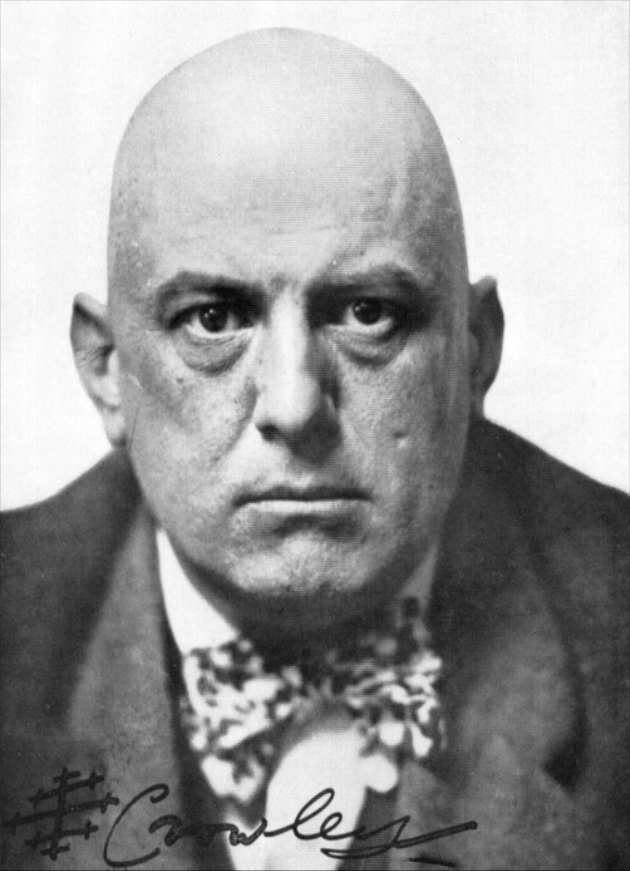
Have they consulted with the whales and seals, or do they rely on human data?  Maybe.  I don't know.  Its just a spur question.  Is it really the thinking and trying that matter?  Or is it only the actions?  Or is the original message/action irrelevant? Was Aleister Crowley correct? "Do what thou wilt?"  Is the only thing important the receiver's interpretation of the message?  Francis Bacon's "Anything can mean anything" relies upon an agreed code.  Can we alter the coding in our own nature or just how it is received?  Anything can mean nothing.  Are the veils of reality that we wear needed to be lifted?  Are we afraid of what we might see?  Would we sacrifice ourselves for beings separated/different from ourselves in order for our own apocalypse to happen? Mike Calway-Fagen's work is up for your own message receiving.  At least its asking questions.  I think.  For more discussions and work visiting questions in an aesthetic manner visit the PostColonials Show at Linda Matney Gallery in Williamsburg, Virginia.  Openings will take place on March 18th at 7 p.m.


Be there or be ^2.

Saturday, January 22, 2011

Freed From the Gallows, Or How I Stopped Fearing Led Zepplin and Love the Ballad


The new design I've been working on is Ballad No. 95, entitled "The Maid Freed From the Gallows", and is about a maid waiting for someone to buy her freedom from the executioner.  Variants have been recorded by Ledbelly, Bob Dylan (recorded as Seven Curses), and Led Zepplin, among many many other artists.   This design can be found HERE, as well as in New York, February 10th and 11th. . . at The Child Ballad Show at UnionDocs.  For More information please visit http://childballads.blogspot.com/


O Hangman, stay thy hand,
And stay it for a while,
For I fancy I see my father
A coming across the yonder stile.

O, father, have you my gold?
And can you set me free?
Or are you come to see me hung?
All on the gallows tree?

No, I've not brought thee gold,
And I can't set thee free;
But I have come to see thee hung
All on the gallows tree.

Oh the briery bush,
That prickes my heart so sore
If I once get out of the briery bush,
I'll never get in any more.

O Hangman, stay thy hand,
And stay it for a while,
For I fancy I see my father
A coming across the yonder stile.

Repeat the verses above with
other relatives -
Mother, Brother, Sister, etc.
The song concludes with
The arrival of her "True Love" as below:

O Hangman, stay thy hand,
And stay it for a while
For I fancy I see my true love
A coming across the yonder stile.

O true-love, have you my gold?
And can you set me free?
Or are you come to see me hung
All on the gallows tree?

O yes, I've brought thee gold,
And I can set thee free;
And I've not come to see thee hung
All on the gallows tree.

O the briery bush,
That pricks my heart so sore;
Now I've got out of the briery bush,
I'll never get in any more. 


Thursday, July 29, 2010

Confirmation Bias: Koans


Another Etsy print utilizing "children's" art tools consists of MechaGodzilla getting a girlfriend as the readers of "The Inquirer" keep an eye on the relationship.   It’s amazing to see how quickly ideas, archetypes, songs; well culture has morphed in the past century.  I suppose we (the royal human we) have always acclimated quickly.  I don't have as large a grasp on language as I wish I did, but am still enthralled with shared cultural words.  Most times being used in mixed language sentences they lose a . . . je ne sais quoi.  And yes, we do have to thank the French for the feminine blonde, while the rest of the English language is neutered. Like spoken English I've been interested in appropriating for a few reasons.  It creates a dialogue with the past along with paying tribute it.  Building upon ideas of the past is how we've advanced to the technological/digital age.   I enjoy seeing things morph, figuring out (or at least creating my own theories) how they connect to the next gestation and adding to it.  It is an instant personal gratification becoming part of something larger than myself.   If it wasn't for a personal enjoyment I may even associate it with the loss of self.  What is that anyway?  "Is it alive, does it writhe? Can it survive under the sun?" The closest thing I equate to a gnostic experience is losing myself to the act of painting and becoming lucid to the fact that I'm awake and dreaming.


   A question was asked of a Zen master,  "What is the meaning of the ancestral teacher's (i.e., Bodhidharma's) coming from the west?" The master answered, "The cypress tree in front of the hall."  But this is about transformations of ideas, traditions, and art.  Knowing what has been is a good clue of what is and will be and like any good lie should be studied.  The variations, the small differences are what have become interesting.  How many times are you going to watch the same movie?  I bet it was based on a play that was performed over two thousand years ago.  There is some funny stuff in transitions for those of us caught in the middle.  In a way, it’s like being aware of puberty, being in it, past it, and aware of it from the other gender's view all at the same time - and the whole time daises that grow from our ancestor's corpses towards the sun, bending in the wind laugh along.  Oh, wait . . . we embalm and encase our dead like they are pharaohs.  No wonder we have movies like "Night of the Living Dead".   No, that doesn't make sense enough . . . let’s go with Brandon Frasier’s "The Mummy" as reference instead, using a shot of  Brock from "The Venture Bros."  fighting a mummy, even though "Night . . ." is much cooooler.


 My third wish is there to be no more 1970-1990 horror movie remakes.  We're supposed to change things, make them better damn it.  I mean look what happened with Gojira.  Someone transformed two Japanese words (and the Japanese do love to abbreviate/transform their words) for gorilla and whale and made up Gojira.  Then it’s misinterpreted to Godzilla for the U.S. release.  That is a radical name, and besides who would have wanted to go see a movie about a gorilla whale? It was something new [(ish) I'm not forgetting "The Beast from 20,000 Fathoms" or earlier stories dating back to St. George].  And then there was the 1998 U.S. Godzilla release promoted by Taco Bell.  Hell, Taco Bell started out as a hot dog stand.   What was my point with this? Ah yes . . . The Child Ballad Show.  Having expressed the need to recognize the importance of "tradition" I think it’s fair to impose one's own will upon its impending change.  The streets don't change but maybe their name . . .  The only fear/sin against tradition is the same for history: forgetting it.  Maybe forgetting should be replaced with "not learning".   To do either would be missing a hold on it.   "Is it numb?  Does it glow, will it shine? Does it leave a trail of slime?"  The most important thing to do with tradition is to play with it.  Game the sh*t out of it.  Most of the time all its doing is pointing out that you’re alive.
 Speaking of transformations. . . I'm happy to be sharing wall space with Bart Lynch (image above) in September.  In the past I've had the chance to visit him in the studio and its mind boggling how he works.  To see these seemingly spontaneous calligraphic marks converge into an overall composition consisting of stories within stories within stories is something to behold.  I highly recommend viewing his work when you get the chance.  That's at least one thing that I'm doing at the Child Ballad Show in Baltimore.  I just finished the painting for the show, and believe me I played the sh*t out of it.   To answer  some of you all's first questions reading this, "No, when making the print I was not consciously thinking about "Bambi meets Godzilla".  Someone pointed that out to me the other day and I almost threw up in my mouth because I had forgotten about it.  I'm more optimistic and think the relationship in my print will turn out better."   Have I learned anything?


Don't forget the 5th law: A Discordian is prohibited from believing what he reads.
If you are having trouble with that, consult your pineal gland.

Time to get back in the studio.


Jiun, a Shingon master, was a well-known Sanskrit scholar of the Tokugawa era. When he was young he used to deliver lectures to his brother students.
His mother heard about this and wrote him a letter:
"Son, I do not think you became a devotee of the Buddha because you desired to turn into a walking dictionary for others. There is no end to information and commentation, glory and honor. I wish you would stop this lecture business. Shut yourself up in a little temple in a remote part of the mountain. Devote your time to meditation and in this way attain true realization."


Saturday, July 17, 2010

Beneficial Conflict


How much more of that "Hell, yeah!"  guy can you take?  I've been reading "Industrial Society and Its Future" by Ted Kaczynski, and the tragic thing is that such a brilliant mind never learned how to take advantage of the institutions he was revolting against.  I'm not quite half way through reading it, and you can feel his self-loathing and personal conflict in his projections of societal problems.  I don't want to detract too much from, what so far as my lame brain can tell is a frighteningly prophetic view of today's culture and problems from a few decades ago.  Although many artists question how to draw more attention to their views and exhibitions, I've never been so drastic in my views that I thought I needed to send mail bombs to express my views, or rather; obtain a larger audience.  From an artistic view point, blowing people up to gain notoriety is kind of slutty.  It’s like wearing the shortest pair of jogging shorts you can find to the mall.  It’s an attempt to spread as much seed as possible, which is what the selfish cell wants after all.  I wonder how big Ted’s balls really were/are.  I read in New Scientist the other day that the larger a man’s testicles are the more apt he is to cheat, or have multiple partners.  I guess a guy just doesn’t need to produce that many mini-hims if he is only concentrating on one person.   Makes you think about all sorts of colloquialisms about testes, doesn’t it? 


I remember in High School wearing a gray hoodie and sunglasses for Halloween.  I’m surprised I didn’t end up feeling like an ass like the time I wore a Ho-Chi Minh t-shirt to a party and a friend’s Dad’s friend was there and had served in Vietnam.  He started chanting the marches they used to do along the Ho-chi Minh trail . . . after he had me smoke the most potent joint on the east coast during the year of 1995. 


(Who needs Facebook for old embarrassing pictures when you have a blog?)The interesting thing is Ho-Chi Minh was out of power by 1950.  That’s only 6 years after WWII.  Right before the U.S. entered into WWI Ho-Chi Minh was living in Harlem, New York hanging out with Marcus Garvey.  Shortly after leaving the U.S. he ended up in France learning about Communism.   Thanks France, for the giant green patina statue in New York.  I’m not sarcastic here, I’m not going to do something lame and ask for freedom fries.  Besides, you gave us Duchamp.  I guess it’s only fair we keep off of Polanski too.  But I’ve digressed.  The Vietnam vet singing me chants from the Ho-Chi Minh trail knew something about beneficial conflict that Kaczynski either knew too well, or not well enough.  I haven’t decided yet.  Our government was set up on beneficial conflict; on checks and balances.  

The Child Ballad Show coming up is another example of beneficial conflict.  This is an argument of, and between, the past and present.  An argument as a conversation meant to evoke a devil’s advocating of tradition.  Tradition and rebellion have always been on the different sides of the same coin.  Some of our founding fathers wanted to make a tradition of rebellion.  Well, we still have fire-works; Ted’s still alive at ADX Florence.  Making tradition out of rebellion is Art Rosenbaum, who will be performing and exhibiting at The Child Ballad Show.  Art and his wife Margo have chronicled many of the Ballads for over 50 years as they appear in the present day by those who have learned them honestly.  No pirating or stealing of songs but passing them around from person to person like a potent herb. Their musical magnum opus can be found here at Arts website.  For those of you living outside of Baltimore or its surrounding states, you should make the effort to experience rebellion.  Art has a lust for life that is catching and comes through in his art work and Music.  A lust for life is the ultimate rebellion.  Who wants to be a rock when we
can roll?  So roll on down to the G-Spot on the 11th of September.  And do I really need to mention that you can purchase the "Beneficial Conflict" print of Godzilla creeping up on the personification of civilization at my Etsy site?   Yes. Yes, I do.  And perhaps Ted didn't want to be self sufficient after all, but taken care of for the rest of his life away from the contact of other people.  And maybe not. You decide. 


Analytica Tracking: